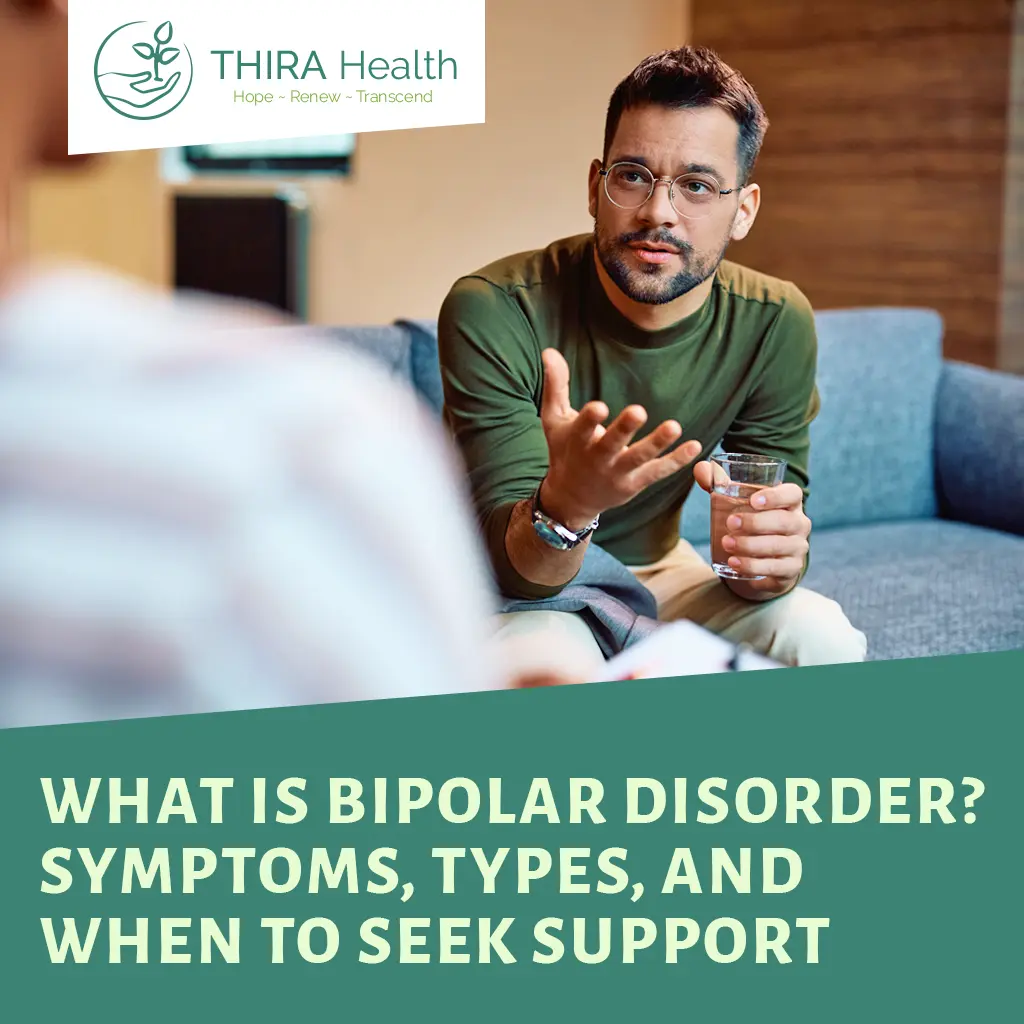
Bipolar disorder is often misunderstood.
Many people think it simply means “mood swings,” but bipolar disorder involves distinct changes in mood, energy, activity level, sleep, thinking, and behavior.
These changes can affect relationships, school, work, safety, and daily life. For some people, the depressive symptoms are easier to recognize than the periods of mania or hypomania. Others may know something feels wrong but are unsure whether they are dealing with depression, anxiety, trauma, stress, or a mood disorder.
Bipolar disorder can feel confusing, but understanding the symptoms and treatment options can make the next step feel less overwhelming.
This guide explains what bipolar disorder is, common symptoms, different types of bipolar disorder, and when to consider professional support.
THIRA Health provides DBT-centered mental health treatment near Seattle and Bellevue, Washington, with connected levels of care that may include residential treatment, Partial Hospitalization Program, and Intensive Outpatient Program depending on clinical fit.
What Is Bipolar Disorder?
Bipolar disorder is a mood disorder that causes shifts in mood, energy, sleep, activity level, thinking, and functioning.
These shifts are more than normal emotional ups and downs. Bipolar disorder involves mood episodes that can significantly affect how someone feels, acts, relates to others, and moves through daily life.
A person with bipolar disorder may experience depressive episodes, manic episodes, hypomanic episodes, or a combination of mood symptoms over time.
Bipolar disorder can look different from person to person. Some people experience severe manic episodes that are easier for others to recognize. Others experience hypomanic episodes that may look like productivity, confidence, irritability, or simply “feeling better.”
Because symptoms can vary, bipolar disorder is sometimes misunderstood, missed, or mistaken for depression, anxiety, ADHD, trauma-related symptoms, or relationship stress.
A careful clinical assessment can help clarify what may be happening and what level of support may be appropriate.
Bipolar Disorder Is More Than Mood Swings
Everyone has emotional highs and lows. A hard day, exciting news, stress at work, lack of sleep, or conflict in a relationship can all affect mood.
Bipolar disorder is different.
The mood changes associated with bipolar disorder are usually more intense, last longer, and create more disruption than everyday mood shifts.
Bipolar disorder may affect:
- Sleep
- Energy
- Motivation
- Risk-taking
- Irritability
- Speech
- Thoughts
- Concentration
- Relationships
- School or work performance
- Daily responsibilities
- Sense of self
- Ability to make safe decisions
Someone may go through a period of deep depression, followed by a period of unusually elevated energy or decreased need for sleep. Another person may experience irritability, racing thoughts, impulsive decisions, and a sense that they cannot slow down.
These episodes are not simply personality traits or bad choices. They are symptoms that deserve careful attention and compassionate care.
Understanding bipolar disorder often starts with understanding the difference between depressive, manic, and hypomanic episodes.
What Are the Symptoms of Bipolar Disorder?
Bipolar disorder symptoms depend on the type of mood episode someone is experiencing.
Some symptoms are more visible to other people. Others may be mostly internal, such as racing thoughts, shame, agitation, hopelessness, or fear that something is wrong.
Symptoms of a Depressive Episode
A depressive episode can affect mood, energy, sleep, appetite, motivation, and daily functioning.
Symptoms may include:
- Persistent sadness, emptiness, or hopelessness
- Loss of interest in activities
- Fatigue or low energy
- Sleeping too much or too little
- Appetite changes
- Difficulty concentrating
- Slowed movements or restlessness
- Feelings of guilt, shame, or worthlessness
- Withdrawal from relationships
- Trouble completing school, work, or home responsibilities
- Thoughts of death or suicide
For some people, depression is the first part of bipolar disorder that becomes obvious. They may seek depression treatment before manic or hypomanic symptoms are recognized.
This is one reason a full assessment matters.
When mood symptoms are recurring, intense, or disrupting daily life, it can be important to look beyond the current depressive episode and understand the broader pattern over time.
Symptoms of a Manic Episode
A manic episode involves a period of unusually elevated, expansive, or irritable mood, along with increased energy or activity.
Symptoms may include:
- Decreased need for sleep
- Racing thoughts
- Talking more than usual or feeling pressure to keep talking
- Increased energy or activity
- Unusually elevated confidence
- Feeling unusually powerful, capable, or invincible
- Impulsive or risky decisions
- Increased spending, sexual risk-taking, substance use, or other high-risk behaviors
- Difficulty slowing down
- Agitation or irritability
- Trouble recognizing that something is wrong
- Conflict with loved ones, coworkers, or school supports
Mania can sometimes feel positive at first, especially if someone has recently been depressed. A person may feel productive, energized, creative, social, or unusually confident.
But mania can become dangerous or disruptive. It may affect judgment, sleep, safety, relationships, finances, work, school, and long-term stability.
Symptoms of a Hypomanic Episode
Hypomania is less severe than mania, but it can still affect daily life and relationships.
A hypomanic episode may include:
- Increased energy
- Less need for sleep
- Feeling unusually productive or driven
- Increased talkativeness
- More impulsivity
- Irritability
- Increased confidence
- Racing thoughts
- Starting many projects at once
- Difficulty recognizing the episode as a problem
Hypomania can be harder to identify because it may not look as disruptive as mania. Some people may even experience it as a welcome break from depression.
But hypomania can still create problems. It may lead to impulsive decisions, relationship strain, burnout, sleep disruption, and later depressive episodes.
If someone is in immediate danger or may harm themselves or someone else, emergency services or a crisis resource should be contacted right away.
Types of Bipolar Disorder
There are several types of bipolar disorder. Each involves mood episodes, but the pattern and severity can vary.
Bipolar I Disorder
Bipolar I disorder involves at least one manic episode.
A person with bipolar I may also experience depressive episodes, but a manic episode is the defining feature. Mania can be severe and may significantly disrupt daily life, safety, relationships, school, or work.
Some manic episodes may require urgent support, especially if the person is at risk of harming themselves, acting impulsively, or losing touch with reality.
Bipolar II Disorder
Bipolar II disorder involves depressive episodes and hypomanic episodes, but not full manic episodes.
Bipolar II can still be serious and disruptive. The depressive episodes may be intense or recurring, while hypomanic episodes may be harder to recognize.
Some people with bipolar II spend more time struggling with depression than with elevated mood, which can make the condition harder to identify without a careful look at mood history.
Cyclothymic Disorder
Cyclothymic disorder involves ongoing mood shifts with hypomanic and depressive symptoms that may not meet the full criteria for bipolar I or bipolar II.
Even when symptoms do not fit neatly into bipolar I or bipolar II, they can still affect daily life and deserve attention.
Other Specified Bipolar and Related Disorders
Some people experience bipolar-related symptoms that do not fit cleanly into one category.
That does not mean the symptoms are not real. It means a clinician may need to understand the full pattern, history, and impact before recommending next steps.
What Can Bipolar Disorder Feel Like?
Bipolar disorder can feel confusing because mood episodes may change how someone sees themselves, other people, and the future.
During depression, someone may feel hopeless, slowed down, ashamed, disconnected, or unable to imagine things improving.
They may withdraw from relationships, stop caring for themselves, struggle to work or attend school, or feel like they are disappointing the people around them.
During mania or hypomania, someone may feel unusually energized, driven, irritable, restless, creative, confident, or certain that they do not need help.
They may sleep very little and still feel wired. They may make fast decisions, take risks, spend money, start major projects, or become frustrated when others express concern.
After an episode, someone may feel embarrassed, exhausted, confused, or worried about what happened.
They may ask themselves:
- Why did I do that?
- Why did I say that?
- Why did I feel so certain in the moment?
- Why can’t I trust my own mood?
- What will people think of me now?
Those questions can be painful.
Bipolar disorder is not a personal failure. It is a mental health condition that deserves thoughtful treatment, practical support, and compassion.
What Causes Bipolar Disorder?
There is no single cause of bipolar disorder.
Several factors may play a role, including:
- Genetics and family history
- Brain and nervous system differences
- Stressful life experiences
- Sleep disruption
- Trauma or major life changes
- Co-occurring mental health conditions
- Substance use or medication-related factors in some cases
Bipolar disorder is complex. It is not caused by weakness, lack of willpower, or simply “not trying hard enough.”
For many people, symptoms become easier to understand when they begin looking at patterns over time. Mood tracking, treatment history, sleep changes, family history, and clinical assessment can all help create a clearer picture.
Bipolar Disorder and Other Mental Health Conditions
Bipolar disorder can sometimes overlap with or be mistaken for other mental health concerns.
These may include:
- Depression
- Anxiety
- PTSD or trauma-related symptoms
- Borderline personality disorder
- ADHD
- Substance use concerns
- Eating disorder symptoms
For example, depressive episodes may look like major depression. Restlessness and racing thoughts may overlap with anxiety or ADHD. Emotional intensity and relationship conflict may overlap with borderline personality disorder. Sleep disruption, irritability, and hyperarousal may overlap with trauma symptoms.
This overlap does not mean someone should diagnose themselves based on a checklist.
It means symptoms deserve a careful, whole-person assessment.
When someone is also experiencing anxiety, trauma-related distress, or recurring depression, treatment planning should consider the full picture.
When to Seek Support for Bipolar Disorder Symptoms
It may be time to seek professional support when mood symptoms are affecting safety, sleep, relationships, school, work, or daily responsibilities.
Support may be especially important if someone is experiencing:
- Repeated depressive episodes
- Periods of unusually high energy or decreased need for sleep
- Impulsive decisions that create consequences
- Mood changes that strain relationships
- Difficulty functioning at school, work, or home
- Thoughts of death, self-harm, or suicide
- Risk-taking that feels hard to control
- Emotional crashes after periods of high energy
- Family concern about changes in mood or behavior
- Weekly therapy that no longer feels like enough support
Some people wait to seek help because they worry they are overreacting.
But support does not have to wait until everything falls apart. Getting help earlier can make it easier to understand symptoms, create a plan, and identify what level of care may fit.
Treatment Options for Bipolar Disorder
Treatment for bipolar disorder should be based on the person’s symptoms, safety needs, functioning, goals, and clinical history.
For some people, outpatient therapy and ongoing clinical care may be enough. Others may need more structured support.
Treatment may include:
- Individual therapy
- Skills-based support
- Structured routines that support sleep and stability
- Family involvement when appropriate
- Clinical care and treatment planning
- Medication management when clinically appropriate
For people who need more than weekly therapy, structured mental health programming may help.
Higher levels of care may include:
The right level of care depends on what the person needs now.
Some people may enter IOP directly. Others may need PHP or residential treatment first, then step down as symptoms stabilize and skills become more usable in daily life.
How DBT Skills Can Support Mood Stability
Dialectical Behavior Therapy, or DBT, does not replace comprehensive bipolar disorder treatment.
But DBT skills may support people with mood-related challenges by helping them build awareness, emotional regulation, distress tolerance, communication skills, and more stable routines.
DBT skills may help people:
- Notice early warning signs
- Track mood changes
- Manage emotional intensity
- Build distress tolerance
- Reduce impulsive reactions
- Improve communication
- Ask for support earlier
- Practice mindfulness
- Maintain routines that support stability
- Recover after conflict or distress
For someone with bipolar disorder, skills can be especially helpful during moments when emotions feel intense, thoughts feel fast, or choices feel urgent.
DBT can help create a pause.
That pause can help someone ask: What am I feeling? What is the urge? What does this moment need? What choice supports my long-term stability?
THIRA Health uses DBT-centered care to help clients practice skills in structured, supportive settings.
Bipolar Disorder Treatment at THIRA Health
THIRA Health provides bipolar disorder treatment and DBT-centered mental health support near Seattle and Bellevue, Washington.
For people experiencing bipolar disorder or other mood-related concerns, care may include structured support through residential treatment, Partial Hospitalization Program, or Intensive Outpatient Program depending on clinical fit.
THIRA’s approach emphasizes skill-building, emotional regulation, whole-person care, community support, and connected levels of treatment.
Clients and families can also learn more about the THIRA Health team and the people behind the care model.
If you are unsure what level of care may be appropriate, THIRA’s admissions process can help you understand your options.
To learn more about bipolar disorder treatment at THIRA Health, call (425) 454-1199 or contact THIRA Health online.
FAQs About Bipolar Disorder
What is bipolar disorder in simple terms?
Bipolar disorder is a mood disorder that causes episodes of depression and episodes of mania or hypomania. These episodes can affect mood, energy, sleep, thinking, behavior, relationships, and daily functioning.
What is the difference between bipolar I and bipolar II?
Bipolar I involves at least one manic episode. Bipolar II involves depressive episodes and hypomanic episodes, but not full manic episodes.
Is bipolar disorder just mood swings?
No. Bipolar disorder is more than everyday mood changes. It involves mood episodes that can significantly affect functioning, relationships, sleep, energy, thinking, and behavior.
Can bipolar disorder look like depression?
Yes. Some people first seek help for depression before hypomanic or manic symptoms are recognized. A careful clinical assessment can help clarify whether symptoms may be related to depression, bipolar disorder, or another concern.
When should someone seek treatment for bipolar disorder?
Someone should consider support when mood symptoms affect safety, sleep, relationships, work, school, daily functioning, or the ability to cope. Immediate safety concerns should be treated as urgent.
Can DBT help with bipolar disorder?
DBT skills may support emotional regulation, distress tolerance, mindfulness, communication, and daily stability. For bipolar disorder, DBT is usually one part of a broader treatment plan rather than a replacement for comprehensive care.
Does THIRA Health treat bipolar disorder?
THIRA Health supports people experiencing mood-related concerns, including bipolar disorder, when clinically appropriate. A clinical assessment can help determine whether residential treatment, PHP, IOP, or another option may fit.
What level of care is best for bipolar disorder?
The right level of care depends on symptoms, safety, functioning, treatment history, and available support outside treatment. Some people may do well with outpatient therapy, while others may need IOP, PHP, or residential treatment.
Final Thoughts
Bipolar disorder can be confusing and painful, but it is also deserving of thoughtful support.
Understanding the symptoms, types of mood episodes, and available treatment options can make the next step feel less overwhelming.
If you or someone you love is experiencing mood symptoms that affect safety, relationships, school, work, sleep, or daily life, a clinical assessment can help clarify what level of support may be appropriate.
THIRA Health provides DBT-centered mental health treatment near Seattle and Bellevue, Washington, through connected levels of care that may include residential treatment, PHP, and IOP depending on clinical fit.
To learn more, call (425) 454-1199 or reach out online.