

Is It Normal Back-to-School Stress or Something More? When Your Teen May Need Extra Mental Health Support
Learn how to recognize when back-to-school stress in teens shifts to deeper mental health concerns needing early support and intervention.
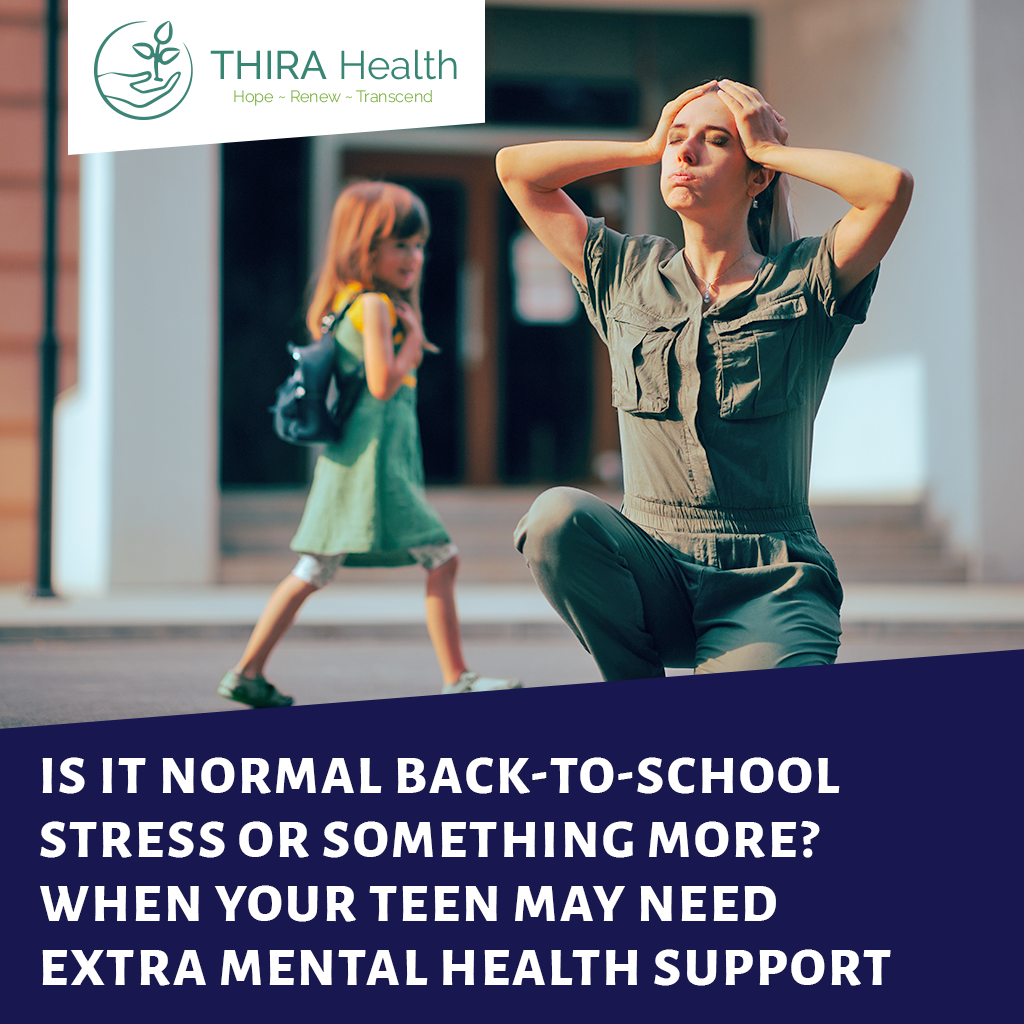
Back-to-school stress is common for teens. New schedules, earlier mornings, social pressure, harder classes, sports, activities, and college planning can all make the first few weeks of the school year feel emotionally intense. Some irritability, tiredness, worry, and adjustment is expected.
But sometimes teen back-to-school stress is more than a normal adjustment period. When changes in sleep, food, mood, school attendance, social connection, or safety begin stacking together, the pattern may point to something deeper than ordinary school nerves.
At THIRA Health, we work with teens and families across the Greater Seattle area who are trying to understand when stress has crossed into anxiety, depression, eating disorder behaviors, self-harm risk, or a need for more structured support. This guide explains what typical back-to-school stress looks like, what warning signs deserve closer attention, and when your teen may need extra mental health support.
Key Takeaways
- Some back-to-school stress is normal: many teens need a few weeks to adjust to the new schedule, workload, and social rhythm.
- The pattern matters more than one rough day: concern rises when sleep, food, mood, school attendance, and social withdrawal shift together and do not improve.
- Eating disorder behaviors can surface quietly: skipped meals, new food rules, secret eating, purging, or body distress should be taken seriously early.
- School refusal can be a sign of anxiety or depression: repeated absences, panic before school, or physical complaints on school mornings may signal more than avoidance.
- Higher levels of care may be needed when symptoms affect safety or daily functioning: PHP, IOP, or residential care can provide more structure than weekly outpatient therapy.
Is It Normal Back-to-School Stress or Something More?
Normal Stress Usually Starts to Soften
Most teens have some friction at the start of a new school year. They may complain about waking up early, feel nervous about classes, get overwhelmed by homework, or seem more tired than usual. They may need a few weeks to find their rhythm again.
Typical back-to-school stress usually improves as the routine becomes familiar. Your teen may still have rough mornings or moments of frustration, but they remain reachable. They can laugh at something. They talk about friends, teachers, or plans. Their eating and sleep may be a little uneven, but they begin to settle.
The key sign is flexibility. A stressed teen can still shift. They may be moody, but they are not completely shut down. They may be tired, but they are still participating in parts of life that matter to them.
Something More May Be Happening When the Pattern Deepens
Parents often know something is wrong before they can fully explain it. Your teen may say they are fine, but their behavior tells a different story. They stop eating normally. They sleep all afternoon or barely sleep at all. They withdraw from friends. They cry more often. They become angry in a way that feels different. They start missing school or seem panicked at the thought of going.
When several areas of life shift at once and the pattern continues for weeks, it is time to look more closely. The question is not whether your teen is having a hard day. The question is whether their ability to function, connect, eat, sleep, attend school, or stay safe is changing.
That is when extra mental health support may be needed.
Five Areas Parents Should Watch Closely
Sleep
Sleep often changes during the first weeks back at school. A teen may stay up too late finishing work, scrolling, or trying to unwind. That can be normal for a short adjustment period.
Sleep becomes more concerning when it stays disrupted or starts affecting daily functioning. Watch for hours of lying awake, waking in the middle of the night with anxiety, sleeping through alarms, falling asleep in class, or sleeping for long stretches but still seeming exhausted.
When sleep is consistently broken, the nervous system has less capacity to manage anxiety, mood swings, irritability, and school pressure.
Food and Eating Patterns
Food is one of the easiest areas to overlook during the back-to-school transition. A skipped breakfast may seem like a rushed morning. A lighter lunch may seem like cafeteria stress. A new interest in “healthy eating” may seem harmless at first.
But eating disorder behaviors can hide inside new routines. Watch for skipped meals, sudden food rules, cutting out entire food groups, eating alone, secret eating, long bathroom trips after meals, distress around school lunches, or growing body dissatisfaction.
If eating patterns are changing alongside anxiety, depression, perfectionism, or school stress, it is worth seeking support from a clinician who understands both eating disorders and co-occurring mental health concerns. You can learn more about related care through our eating disorder treatment resources.
Mood
Teens can be irritable during transitions. A few emotional moments do not automatically mean something is wrong. But mood changes become more concerning when sadness, anger, flatness, panic, or hopelessness does not lift.
Pay close attention to comments like “I do not care anymore,” “Nothing matters,” “Everyone would be better off without me,” or “I cannot do this.” These may sound casual, but they should never be brushed off as ordinary teen drama.
Social Withdrawal
Some teens need more alone time when school starts. That is not automatically a problem. But withdrawal becomes more concerning when your teen stops connecting with people and activities that used to matter to them.
They may stop texting friends, quit an activity, avoid social plans, spend most of their time in their room, or seem disconnected even when others try to engage. Social withdrawal can be tied to anxiety, depression, bullying, body image distress, trauma, or exhaustion from masking all day at school.
School Avoidance
Dragging through the morning is common. Repeatedly refusing school, panicking before drop-off, hiding in the nurse’s office, or having stomachaches and headaches that cluster around school days can signal something more.
School avoidance is often a symptom, not the whole problem. The root may be anxiety, depression, bullying, social fear, academic overwhelm, trauma, eating disorder behaviors, or fear of being seen and judged.
Rather than asking only, “How do we get them back through the door?” it helps to ask, “What does school feel like to them right now?”
Why the School Year Can Surface Hidden Mental Health Struggles
Pressure Stacks Quickly
The start of the school year brings a lot at once. Earlier mornings, academic expectations, changing friendships, sports, extracurriculars, college pressure, body comparison, and family schedule stress can all land in the same few weeks.
For teens who were already vulnerable, the school year can expose what summer temporarily covered. A teen who seemed okay with fewer demands may struggle once the schedule tightens and the social world becomes louder again.
This does not mean school is bad. For many teens, school provides structure, connection, and support. But for others, the same environment can become overwhelming if anxiety, depression, eating disorder symptoms, or self-harm urges are already building underneath.
Teens Often Communicate Through Behavior Before Words
Many teens do not have the language to say, “I am depressed,” “I am restricting food,” “I feel unsafe at school,” or “I am overwhelmed by anxiety.” They may say they are tired. They may snap at you. They may shut down. They may insist nothing is wrong.
Behavior often speaks before words do. A lunchbox coming home full, repeated missed assignments, long periods of isolation, unexplained anger, or a sudden refusal to go to school may be the first signs that something deeper is happening.
Staying curious instead of reactive can help. A simple, steady statement like “I have noticed things seem harder lately, and I am here with you” may open more space than a rapid series of questions.
Eating Disorder Behaviors That Can Appear During Back-to-School Season
Restriction Can Hide Inside a Busy Schedule
Back-to-school routines can make restriction easier to hide. Breakfast is skipped because the morning is rushed. Lunch is skipped because the cafeteria feels stressful. Dinner is picked at because homework or practice runs late. Over time, the pattern may become more rigid and intentional.
Watch for excuses that repeat. “I already ate.” “I am not hungry.” “The cafeteria is gross.” “I am eating healthier.” “I am too busy.” Any one of these may be harmless. Together, they may point to a developing eating disorder pattern.
Food concerns should be taken especially seriously when they appear alongside anxiety, perfectionism, social withdrawal, body checking, compulsive exercise, or mood changes.
Other Eating Disorder Warning Signs
Eating disorder signs are not always obvious. Some teens lose weight, but others do not. Some restrict, while others binge, purge, or move between patterns. Some develop intense fear around specific foods or eating environments.
Possible warning signs include:
- Skipping meals or avoiding eating with others
- New food rules or sudden elimination of food groups
- Increased body checking or negative body talk
- Compulsive exercise or distress when unable to exercise
- Secret eating, binge episodes, or food disappearing
- Bathroom trips soon after meals
- Lightheadedness, coldness, fatigue, hair shedding, or irregular periods
- Growing anxiety around school lunches, restaurants, or family meals
If your gut tells you something is wrong with your teen’s eating, trust that signal. Eating disorders can become more entrenched when families wait too long to ask for help.
Co-Occurring Concerns Are Common
Eating disorder symptoms often overlap with anxiety, depression, self-harm, trauma, ADHD, or other mental health concerns. That overlap matters because treating food behavior alone may not address the emotional pain driving the pattern.
At THIRA, we look at the whole person, not only the most visible symptom. Our teen-focused care is designed to address co-occurring emotional, behavioral, and eating-related concerns when they show up together.
What Parents Can Do at Home
Start With Observation, Not Interrogation
When you are scared, it is natural to ask a lot of questions quickly. But teens often shut down when they feel investigated. It may help to begin with what you notice rather than what you suspect.
Instead of “Are you depressed?” or “Are you not eating again?” try something like: “I noticed you have seemed quieter and dinner has been harder this week. I am not mad. I want to understand what is going on.”
This lowers defensiveness and keeps the door open for more honest conversation.
Use DBT-Informed Skills to Get Through the Hard Moments
The first step is not always solving the whole problem. Sometimes it is helping your teen get through the next hard hour without making the situation worse. DBT skills can be useful here, especially for distress tolerance and emotion regulation.
Simple distress tolerance tools can help bring the nervous system down. Cold water on the face, slow breathing with longer exhales, holding ice, taking a short walk, or using grounding skills can help a teen ride out a spike of panic or emotional overwhelm.
These skills are not a substitute for treatment when treatment is needed, but they can help families respond more calmly while waiting for support. You can learn more from our resource on TIPP, a DBT skill for nervous system regulation.
Keep the Basics as Steady as Possible
Sleep, meals, movement, structure, and predictable connection all matter. When a teen is dysregulated, these basics can feel impossible, but they are often the foundation for emotional stability.
Families can help by making home calmer and more predictable. That may mean regular meals, earlier wind-down time, fewer late-night arguments, clearer expectations, and small moments of connection that do not turn into pressure-filled conversations.
The goal is not perfection. It is steadiness.
When Outpatient Therapy May Be Enough
Early Support Can Make a Big Difference
Outpatient therapy may be enough when your teen is still functioning in key areas. They may be stressed, anxious, or sad, but they are still attending school most days, eating with some consistency, sleeping enough to function, staying safe, and willing to participate in therapy.
This is the window where early support can be especially helpful. A therapist can help your teen build coping skills, identify what is driving stress, and prevent symptoms from deepening.
If your teen is still able to function but needs more skills and support, a less intensive level of care may be appropriate. THIRA’s intensive outpatient program may also be worth exploring when weekly therapy does not feel like enough but residential care is not needed.
When Your Teen May Need Extra Mental Health Support
Signs a Higher Level of Care May Be Needed
A higher level of care may be needed when weekly therapy cannot hold the level of distress your teen is experiencing. This does not mean outpatient therapy failed. It means your teen may need more structure, more support, more skill practice, and more clinical contact during the week.
Consider PHP, IOP, or residential care when you are seeing patterns like:
- School attendance is collapsing
- Meals are being skipped, restricted, binged, or purged
- Self-harm has started or escalated
- Your teen has made suicidal comments or you have found something that scares you
- Sleep is severely disrupted
- Panic, depression, or emotional shutdown is interfering with daily life
- The household is reorganizing around managing the next crisis
- Weekly therapy is repeatedly overwhelmed by what happens between sessions
If safety is an immediate concern, seek emergency support right away. If the concern is serious but not an immediate emergency, a more structured treatment program may help stabilize the pattern before it deepens further.
How THIRA Supports Teens and Families
At THIRA, our teen-focused programs are built around DBT skills, emotional regulation, mindfulness, distress tolerance, interpersonal effectiveness, and family involvement. These skills are not just discussed once a week. They are practiced and reinforced as part of the treatment environment.
We treat co-occurring concerns together whenever they overlap. That may include anxiety, depression, eating disorder behaviors, self-harm, trauma-related symptoms, and school-related distress. Families also receive support so the skills being practiced in treatment can continue at home.
For teens who need more structure, our outpatient programs for teens can provide a more supportive bridge when weekly therapy alone is not enough.
Frequently Asked Questions
How long should back-to-school stress last before I worry?
Many teens need a few weeks to adjust. If stress is still worsening after several weeks, or if sleep, food, mood, school attendance, and social connection are all shifting together, it is worth seeking a professional opinion.
What is the difference between normal school nerves and an anxiety disorder?
Normal nerves usually show up around specific stressors and improve once the situation passes. An anxiety disorder tends to persist, interfere with functioning, and may cause avoidance, panic, sleep problems, physical symptoms, or repeated reassurance-seeking.
My teen says they are fine, but their eating has changed. Should I be concerned?
Yes, it is worth paying attention. One skipped meal may not mean an eating disorder, but repeated meal skipping, new food rules, secret eating, purging signs, body distress, or physical symptoms should be taken seriously.
When should we consider PHP, IOP, or residential care?
Consider a higher level of care when weekly therapy is not enough to support your teen’s safety or daily functioning. Signs may include school refusal, self-harm, suicidal comments, eating disorder behaviors, severe sleep disruption, or escalating emotional distress.
Can DBT skills help with back-to-school stress?
Yes. DBT skills can help teens tolerate distress, regulate emotions, communicate needs, and stay more grounded during stressful transitions. Skills can help before, during, and after formal treatment, but they are not a replacement for care when symptoms are serious.
Trust the Pattern, Not Just the Reassurance That Everything Is Fine
Is it normal back-to-school stress or something more? The answer often becomes clearer when you look at the full pattern. A few hard mornings may be normal. But when sleep, food, mood, social connection, school attendance, or safety are changing together, your teen may need more support.
You do not need to wait until everything falls apart before asking for help. Early support can help your teen build skills, stabilize symptoms, and prevent the school year from becoming a longer crisis.
At THIRA Health, we help teens and families understand what is happening beneath the surface and find the level of care that fits. If back-to-school stress is starting to look like something more, our team can help you think through the next step.
Get Support for Teen Back-to-School Mental Health Concerns
If your teen’s stress is affecting sleep, eating, school attendance, safety, or daily life, our team can help you understand what level of care may fit.
More From THIRA
Keep Exploring
Practical perspectives and skills to support your next step.

Why Perfectionism Gets Worse in the Fall and What to Do About It
Learn how reduced daylight and seasonal stress worsen fall perfectionism and explore effective strategies to manage anxiety and self-criticism.
DBT Skills Spotlight: What and How Skills for Managing Depression
Depression symptoms can drag your attention away from the moment, making it hard to focus on experiencing life. Brain fog can make…
Navigating Change as a Family: Using DBT to Manage Teen Anxiety
Why do some teens experience anxiety with change? Change can be hard on anyone, even when it’s expected, like the back-to-school transition.…